
Roofing & exteriors
How Many Shingles Do I Need for a Roof?
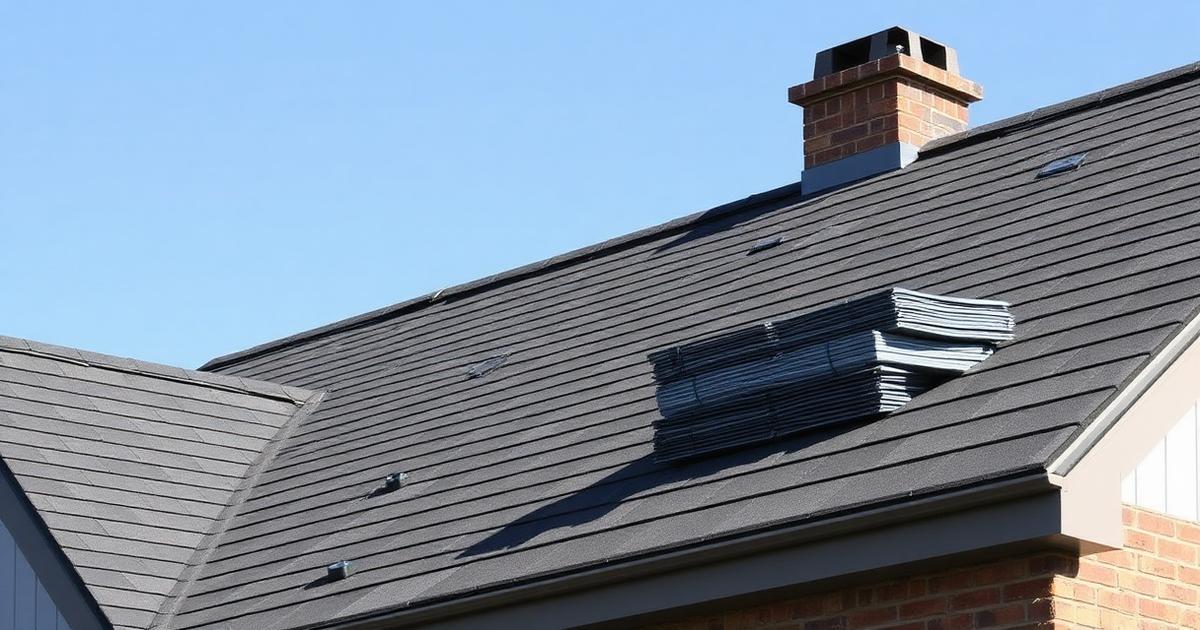
By the HomeCalc USAReviewed against our editorial policyLast updated US units and pricing
Divide total roof surface area by 100 to get squares, then multiply by 3 for bundles of standard architectural shingles. Add 10% waste on a simple gable roof and 15% on a cut-up hip roof. A 2,000 sq ft footprint on a 6/12 pitch is about 2,236 sq ft of roof, 22.4 squares, or roughly 74 bundles with waste.
Skip the arithmetic: use the Roofing Calculator.
Key takeaways
- One roofing square = 100 square feet. Three bundles of standard shingles cover one square.
- Roof area is always larger than the ground footprint — multiply by the pitch factor.
- Waste allowance is 10% for simple roofs, 15% or more for hips, valleys and dormers.
- Shingles are only part of the order: underlayment, ice-and-water barrier, starter strip, ridge cap, drip edge and nails all scale with the roof.
Step 1: get the roof area, not the floor area
Measure the building footprint the roof covers, including overhangs, then multiply by a pitch factor. Pitch is expressed as vertical rise over 12 inches of horizontal run.
Pitch multipliers
| Pitch | Multiplier |
|---|---|
| 3/12 | 1.031 |
| 4/12 | 1.054 |
| 6/12 | 1.118 |
| 8/12 | 1.202 |
| 10/12 | 1.302 |
| 12/12 | 1.414 |
Step 2: squares and bundles
Worked example: a 2,000 sq ft footprint at 6/12 pitch is 2,000 x 1.118 = 2,236 sq ft, or 22.4 squares. With 10% waste that is 24.6 squares, about 74 bundles.
Premium and designer shingles are heavier and often need four or five bundles per square — always check the wrapper before ordering.
- Roof area / 100 = squares.
- Add waste: multiply squares by 1.10 for a simple gable, 1.15 for hips and valleys, up to 1.20 for complex roofs with several dormers.
- Multiply squares by 3 to get bundles of standard three-tab or architectural shingles.
- Round up to whole bundles, and keep a spare bundle for future repairs.
Everything else that scales with the roof
- Underlayment: synthetic rolls typically cover 10 squares each.
- Ice-and-water shield: required along eaves in cold climates, usually 2 to 6 feet up from the wall line depending on local code.
- Starter strip: linear feet of eaves plus rakes.
- Ridge cap: linear feet of ridges and hips; a bundle of cap covers about 20-35 linear feet.
- Drip edge: linear feet of eaves and rakes, sold in 10 ft sections.
- Nails: about 320 nails, roughly 2.5 pounds, per square at 4 nails per shingle; high-wind zones use 6.
Tear-off, layers and disposal
Most US codes allow a maximum of two shingle layers. A second layer over an existing one saves tear-off labor but hides deck damage and shortens the new roof's life; full tear-off is the better long-term choice.
Disposal matters to the budget: a square of stripped asphalt shingles weighs 230-320 pounds. A 24-square roof produces roughly 3 to 4 tons of debris, typically one 20-yard dumpster.
Ventilation and deck condition
A roof replacement is the moment to fix ventilation. The common target is 1 square foot of net free vent area per 150 square feet of attic floor, split roughly evenly between intake at the soffits and exhaust at the ridge. Poor ventilation cooks shingles from below and voids many warranties.
Budget for some deck repair. Even on a sound roof it is normal to replace a few sheets of sheathing once the old shingles are off, and contractors usually price that as a per-sheet extra rather than including it up front.
Estimate versus contractor quote
A material count tells you whether a quote is in a sensible range; it is not a bid. Labor typically makes up 50-60% of an asphalt roof replacement, and steep pitches above 8/12, multiple stories, and difficult access all raise that share.
Ask each contractor for the same breakdown: squares, waste percentage, tear-off layers, deck repair rate, underlayment type, ventilation work and warranty. Quotes that differ wildly usually differ in scope, not just price.
Frequently asked questions
How many shingles are in a bundle?
Standard three-tab bundles typically hold about 26 to 29 strips; architectural (laminated) bundles hold fewer, often 17 to 22, because each strip is thicker. The bundle wrapper states the exact count and the square footage it covers, usually about 33.3 sq ft (three bundles per 100 sq ft square).
How many bundles of shingles are in a square?
Three bundles for standard three-tab and most architectural shingles. Heavier designer profiles can take four or five.
How many squares is a 2,000 square foot house?
It depends on pitch. A 2,000 sq ft footprint at 6/12 gives about 2,236 sq ft of roof, or 22.4 squares before waste.
How much waste should I add for shingles?
10% for a straightforward gable roof, 15% when there are hips and valleys, and up to 20% for complex roofs with several dormers or steep cuts.
Can I install new shingles over old ones?
Many jurisdictions allow one layer over one existing layer, but never a third. Overlaying hides rotten decking and traps heat, which shortens the life of the new roof.
Sources and references
- FEMA — Roof covering and wind resistance guidance — Fastening patterns and high-wind requirements for asphalt shingles.
- US Department of Energy — Attic ventilation and insulation — Reference for intake and exhaust ventilation ratios.