
Home Improvement
Roofing Calculator – Roof Square Footage, Shingles and Cost
Estimate how many roofing squares, shingle bundles and how much underlayment a roof replacement needs, plus the total material cost, based on the building's footprint and roof pitch.
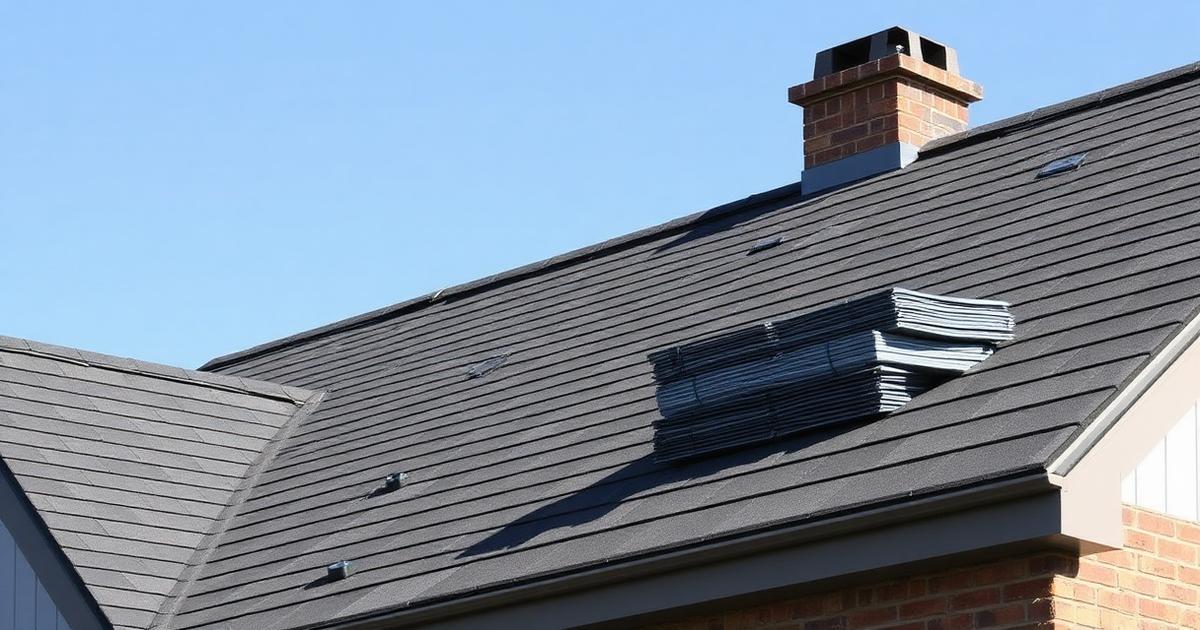
How many squares of shingles do I need for my roof?
Multiply the building's footprint (length × width) by a pitch multiplier that accounts for the roof's slope, then divide by 100 to get squares. A 40 ft × 30 ft house with a 6/12 pitch has a footprint of 1,200 ft², a pitch multiplier of about 1.118, giving roughly 1,342 ft² of roof surface — about 13.4 squares before waste, or roughly 14.8 squares after a 10% waste allowance.
Key takeaways
- Roof area is always larger than the building footprint — the pitch multiplier accounts for the slope.
- Materials are sold by the square (100 sq ft), so quantities are rounded up to whole squares and bundles.
- A 10-15% waste allowance covers cuts around hips, valleys, ridges and roof penetrations.
- Steeper roofs need more material and typically cost more to install per square due to added labor difficulty.
- This estimate covers shingles, underlayment and optional tear-off/labor — not flashing, vents, gutters or structural repairs.
Enter your details
Estimated result
Roofing squares needed
15 squares
1,476 ft² of roof surface including a 10% waste allowance
- Shingle bundles
- 45
- Estimated total cost
- $5,625
Roof area
- Building footprint
- 1,200 ft²
- Pitch multiplier (6/12)
- 1.118
- Roof surface area
- 1,342 ft²
- Waste allowance (10%)
- 134 ft²
- Total roof area
- 1,476 ft²
Materials
- Squares (exact)
- 14.76
- Squares to order
- 15
- Bundles to order
- 45
Cost breakdown
- Shingles
- $5,250
- Underlayment
- $375
- Tear-off & disposal
- $0
- Labor
- $0
- Estimated total
- $5,625
- Squares are rounded up to the nearest quarter square and bundles to the nearest whole bundle, since shingles are sold in fixed units.
Your result is an estimate based on the information entered.
Calculated in your browser
This calculator runs locally; your exact figures are not sent to our servers. Anonymous usage events (calculator name, field names, rounded value ranges) are recorded by Google Analytics — see the privacy policy.
HomeCalc USA — Roofing Calculator
Generated
Inputs
- Roof footprint length: 40
- Roof footprint width: 30
- Roof pitch (rise per 12" run): 6/12 (common)
- Waste allowance: 10
- Bundles per square: 3
- Shingle price per square: 350
- Underlayment cost per square: 25
- Tear-off & disposal cost per square: 0
- Labor cost per square: 0
Results
Roofing squares needed: 15 squares
- Building footprint: 1,200 ft²
- Pitch multiplier (6/12): 1.118
- Roof surface area: 1,342 ft²
- Waste allowance (10%): 134 ft²
- Total roof area: 1,476 ft²
- Squares (exact): 14.76
- Squares to order: 15
- Bundles to order: 45
- Shingles: $5,250
- Underlayment: $375
- Tear-off & disposal: $0
- Labor: $0
- Estimated total: $5,625
Assumptions
- The roof footprint is measured at ground level and the pitch is uniform across the roof.
- Squares and bundles are rounded up because materials are sold in fixed increments.
- Bundles-per-square reflects the specific shingle product entered, not a universal constant.
- Cost figures are material and optional labor estimates per square, excluding taxes.
Estimates are for informational purposes only and may differ from actual costs, lender offers, tax assessments or contractor quotes.
What your result means
The primary result is the number of squares to order, already including your waste allowance and rounded up to a quarter square since suppliers sell in fixed increments. The bundle count follows from the bundles-per-square figure for your chosen shingle product, and the cost breakdown separates shingles, underlayment, tear-off and labor so you can see where the estimate comes from.
How to use this calculator
Measure the building's footprint — its length and width at ground level, as if looking straight down — rather than measuring along the sloped roof surface.
Select the roof pitch, expressed as inches of rise per 12 inches of horizontal run. A typical residential roof is 4/12 to 8/12; steeper roofs need more material for the same footprint.
Add a waste allowance to cover cuts around hips, valleys, ridges and penetrations like vents and chimneys — 10% is standard for a simple roof, more for a complex one.
Enter shingle, underlayment, tear-off and labor pricing per square to get a full cost breakdown, or leave the ones you don't need at zero for a materials-only estimate.
What each input means
| Input | What it means |
|---|---|
| Roof footprint length / width | The building's plan-view dimensions, measured at ground level, not along the roof slope. |
| Roof pitch | Rise per 12 inches of run; steeper pitches increase the actual roof surface area for the same footprint. |
| Waste allowance | Extra material for cuts at hips, valleys, ridges and around vents or chimneys. |
| Bundles per square | How many shingle bundles cover 100 sq ft for the specific product you're buying. |
| Price per square | Material cost for shingles per 100 sq ft, before underlayment, tear-off or labor. |
Formula used
Footprint area (ft²) = length (ft) × width (ft)
Pitch multiplier = √(1 + (rise ÷ 12)²)
Roof area (ft²) = footprint area × pitch multiplier
Total area = roof area × (1 + waste ÷ 100)
Squares = total area ÷ 100
Bundles are the square count multiplied by the bundles-per-square figure, rounded up to a whole bundle. Cost is the number of squares ordered multiplied by each per-square price, summed across shingles, underlayment, tear-off and labor.
Worked example
A house with a 40 ft × 30 ft footprint and a 6/12 pitch:
40 × 30 = 1,200 ft² footprint
√(1 + (6 ÷ 12)²) ≈ 1.118
1,200 × 1.118 ≈ 1,342 ft² roof area
Adding a 10% waste allowance brings the total to about 1,476 ft², or 14.76 squares, rounded up to 15 squares. At 3 bundles per square that is 45 bundles. At $350 per square for shingles plus $25 per square for underlayment, materials cost about $5,625.
How to calculate the square foot of a roof
Measure the footprint length and width in feet and multiply them. Then multiply by the pitch multiplier for your slope. That gives the roof project square foot area. Divide by 100 for squares.
How many square feet of roofing shingles will I need?
Shingle calculation follows the same area, plus waste. Most asphalt shingles cover 33.3 square feet per bundle, so three bundles cover one square. To estimate the amount, take your squares after waste and multiply by three for the number of bundles. Heavier architectural products may need four or five bundles per square, so check the wrapper before ordering material calculations of your own.
What is a roofing square?
A roofing square is 100 square feet of roof surface. Shingles, underlayment and most roofing materials are priced and packaged by the square, which is why roofers quote jobs in squares rather than square feet.
How does roof pitch affect material needs?
Pitch describes how steep the roof is, usually as inches of rise per 12 inches of horizontal run. A steeper pitch means more actual roof surface for the same building footprint, since the sloped plane is longer than the flat area beneath it. The pitch multiplier converts footprint area into true roof area.
How many bundles of shingles are in a square?
Most standard three-tab and architectural shingles are packaged 3 bundles per square, though some heavier architectural or designer shingles use 4 or 5 bundles per square. Check the product label, since this changes the bundle count for the same roof area.
Factors that change the result
- Roof complexity
- Roofs with many hips, valleys, dormers or skylights need more waste allowance than a simple gable roof of the same area.
- Pitch and walkability
- Roofs steeper than about 6/12 to 8/12 often require additional safety equipment and slow down installation, raising labor cost per square.
- Number of layers to remove
- Removing multiple existing layers of shingles increases tear-off and disposal cost beyond a single-layer estimate.
- Underlayment type
- Synthetic underlayment and ice-and-water shield in valleys or eaves cost more per square than basic felt paper.
- Local climate and code
- Areas with high wind, snow load or wildfire risk may require heavier shingles, additional fasteners or fire-rated materials.
- Flashing and accessories
- New flashing around chimneys, vents and skylights, plus ridge caps and starter strips, add cost beyond field shingles alone.
Common mistakes to avoid
Using footprint area instead of roof area
The flat building footprint understates actual roof surface once the pitch multiplier is applied, leading to a shortfall in ordered material.
Skipping the waste allowance
Cuts at hips, valleys and penetrations consume shingles beyond the raw area calculation; ordering exact coverage risks running short mid-job.
Assuming 3 bundles per square for every product
Some architectural and designer shingles use 4 or 5 bundles per square, which changes the bundle count even though the square count stays the same.
Forgetting tear-off and disposal costs
Removing an existing roof and hauling away old shingles is a separate cost that a materials-only estimate will miss.
Ignoring complex roof geometry
A roof with several pitches, dormers or additions needs to be measured and estimated in sections rather than as one simple rectangle.
Practical tips
- Break a roof with multiple sections or pitches into rectangles, run the calculator for each, and add the results.
- Ask your supplier for the exact bundles-per-square figure printed on the product wrapper.
- Add extra waste allowance, often 15% or more, for roofs with many valleys, dormers or a steep pitch.
- Price underlayment, ice-and-water shield and ridge cap separately if your supplier lines them out individually.
- Get a written quote for tear-off and disposal, since dump fees vary significantly by location and number of layers removed.
When the estimate may differ from reality
An actual roofing quote can differ from this estimate because of roof complexity (hips, valleys, dormers, skylights), the number of existing shingle layers to remove, local disposal fees, and the exact shingle product's bundle count and price. Flashing, ventilation, structural repairs and permits are also priced separately by most contractors and are not included here.
Assumptions and limitations
What this calculator assumes
- The roof footprint is measured at ground level and the pitch is uniform across the roof.
- Squares and bundles are rounded up because materials are sold in fixed increments.
- Bundles-per-square reflects the specific shingle product entered, not a universal constant.
- Cost figures are material and optional labor estimates per square, excluding taxes.
What it does not account for
- Flashing, ridge vents, drip edge, starter strips and roof penetrations (vents, chimneys, skylights).
- Structural repairs to decking or framing found during tear-off.
- Permits, disposal fees beyond the entered tear-off cost, and steep- or high-roof surcharges.
- Complex roof geometry (multiple pitches, dormers, additions) not captured by a single rectangle.
Frequently asked questions
- What is a roofing square?
- A roofing square equals 100 square feet of roof surface. Shingles, underlayment and most roofing materials are priced and packaged by the square, so contractors quote jobs in squares rather than raw square footage.
- How do I figure out my roof pitch?
- Roof pitch is expressed as inches of rise per 12 inches of horizontal run, such as 6/12. You can measure it with a level and tape measure in the attic, or check your home's building plans. If unsure, 6/12 is a common default for many residential roofs.
- How much waste allowance should I use for roofing?
- 10% is standard for a simple gable roof. Roofs with multiple hips, valleys, dormers or a steep pitch often need 15% or more, since more of the material is cut to fit around angles and penetrations.
- How many bundles of shingles do I need per square?
- Most standard three-tab and architectural shingles use 3 bundles per square, but some heavier architectural or designer products use 4 or 5. Always check the specific product's packaging rather than assuming 3.
- Does a steeper roof need more shingles?
- Yes. The actual roof surface area is larger than the flat building footprint, and it grows with pitch — a 12/12 pitch roof has significantly more surface area than a 4/12 pitch roof over the same footprint, which this calculator accounts for with the pitch multiplier.
- Should I include tear-off cost in a roofing estimate?
- Include it if you're replacing an existing roof rather than building new. Tear-off and disposal cost is usually priced per square and varies with the number of existing shingle layers and local dump fees, so enter your contractor's quoted rate if you have one.
- Is this estimate the same as a roofing contractor's quote?
- No. This calculator estimates shingle, underlayment and optional labor cost by area. A contractor's quote also covers flashing, ventilation, drip edge, permits, structural repairs and site-specific factors like roof access, which can meaningfully change the total price.
Sources and references
- NRCA — National Roofing Contractors Association — Industry guidance on roofing materials and installation practices.
Related guides
- Roof Pitch, Rise, Span, and Truss Spacing ExplainedDefinitions and formulas for roof pitch, rise, run, span, sloping length, overhang and truss count, with a labelled worked example. Geometry only — not structural design.
Related calculators
- Home Renovation Cost CalculatorBuild a transparent renovation budget from your own material, labor and contingency inputs.
- Flooring CalculatorWork out square footage and how many boxes of flooring to order, including waste.
- Paint CalculatorEstimate paintable wall area and how many gallons of paint your project needs.
- Concrete CalculatorCalculate concrete volume for slabs, footings, sidewalks, patios and post holes.